Winter Damage Check: Hidden Problems Your Used Car May Have After Snow Season

By: Dragon Auto AMG

Winter in Montreal is beautiful—but it can be brutal on vehicles. Snowstorms, freezing temperatures, road salt, potholes, and icy conditions all combine to create a perfect storm of wear and tear for your vehicle. By the time spring arrives, many drivers assume their cars survived the winter just fine. However, the reality is that hidden winter damage can quietly develop and lead to expensive repairs later if left unchecked.
This is especially important if you drive a used car, as these vehicles may already have accumulated mileage or wear before facing another tough Canadian winter. Even the most reliable vehicle can develop hidden issues after months of exposure to harsh weather.
That’s why a winter damage check for your used car is one of the smartest things you can do once the snow begins to melt. Identifying small problems early can save money, prevent breakdowns, and keep your vehicle safe for the road ahead.
In this guide, we’ll explore the most common hidden problems your used car may have after snow season, what causes them, and how drivers in Montreal can detect and address them before they become major headaches.
Post-Winter Used Car Inspection: Why It Matters More Than You Think
After months of cold temperatures and icy roads, vehicles go through significant stress. Many problems caused by winter conditions don’t appear immediately. Instead, they slowly develop over time and become noticeable weeks or months later.
A thorough used car winter damage check ensures your vehicle remains safe, efficient, and reliable.
Road Salt Corrosion: The Silent Enemy of Used Cars
One of the biggest threats to vehicles during winter is road salt. Montreal uses salt extensively to melt snow and ice, which improves driving safety but can quietly damage vehicles.
Salt accelerates corrosion by reacting with metal surfaces. When it accumulates under the car or around exposed components, it begins to eat away at metal parts.
Common areas affected include:
Frame and chassis
Brake lines
Suspension components
Exhaust system
Wheel wells
Many drivers assume a quick car wash removes all salt, but unfortunately, salt can hide in tight spaces where moisture collects.
Signs of salt-related damage may include:
Flaking metal
Visible rust spots
Weak or deteriorating components
Loose or rattling undercarriage parts
If corrosion is ignored long enough, it can compromise structural integrity. This is why checking for rust after winter is essential for any used car owner.
Moisture Buildup and Hidden Electrical Issues
Winter driving conditions also expose vehicles to excessive moisture. Snow and ice melt during driving, then refreeze overnight, allowing water to seep into areas that normally remain dry.
Over time, this moisture can affect electrical components.
Potential problems include:
Sensor malfunctions
Dashboard warning lights
Battery corrosion
Wiring issues
Modern vehicles rely heavily on electronics for everything from safety systems to engine performance. Even minor electrical problems can lead to confusing warning messages or unpredictable vehicle behavior.
For used cars, this is particularly important because older electrical components may already be more vulnerable.
Frozen Components That Slowly Weaken Over Time
Some parts of a vehicle expand and contract repeatedly during winter due to temperature changes.
For example:
Rubber seals become brittle
Plastic connectors crack
Suspension bushings stiffen
These parts may still function but slowly degrade, which leads to reduced performance over time.
Drivers might notice:
Increased cabin noise
Vibrations while driving
Slight steering looseness
Unusual creaking sounds
These subtle symptoms often appear after winter ends, which is why a post-winter inspection is valuable.

Suspension and Tire Damage Caused by Winter Roads
Montreal drivers are all too familiar with potholes. Winter conditions create countless road imperfections that can damage suspension systems.
Your used car’s suspension and tires absorb the impact of rough roads, which means they often suffer the most damage during winter.
Pothole Damage to Suspension Components
When a vehicle hits a pothole, the impact travels through the wheels and suspension.
Components commonly affected include:
Shock absorbers
Struts
Control arms
Tie rods
Wheel bearings
Sometimes drivers feel immediate symptoms like steering misalignment or vibrations.
However, smaller impacts may cause slow damage that becomes noticeable later.
Signs your suspension may have suffered winter damage include:
Car pulling to one side
Uneven tire wear
Steering wheel vibrations
Clunking sounds over bumps
Ignoring these symptoms can lead to more expensive repairs later.
Tire Wear and Alignment Issues
Winter driving conditions also accelerate tire wear. Snow, ice, and cold temperatures change how rubber behaves on the road.
Cold weather causes tires to:
Lose air pressure
Harden slightly
Wear unevenly
Combine this with potholes and rough roads, and your tires may be significantly worn by spring.
After winter, drivers should check:
Tire pressure
Tread depth
Uneven wear patterns
Sidewall damage
If alignment was affected during winter, you may notice the steering wheel sitting slightly off-center or the car drifting while driving.
Wheel and Rim Damage from Ice and Road Debris
Hidden damage can also occur to the wheels themselves.
During winter, vehicles often hit:
Frozen snow chunks
Road debris
Ice ridges
Pothole edges
These impacts can bend rims slightly, which causes subtle vibration while driving.
Drivers may feel:
Shaking at highway speeds
Steering wheel wobble
Difficulty balancing tires
Even minor rim damage can affect ride quality and long-term tire wear.
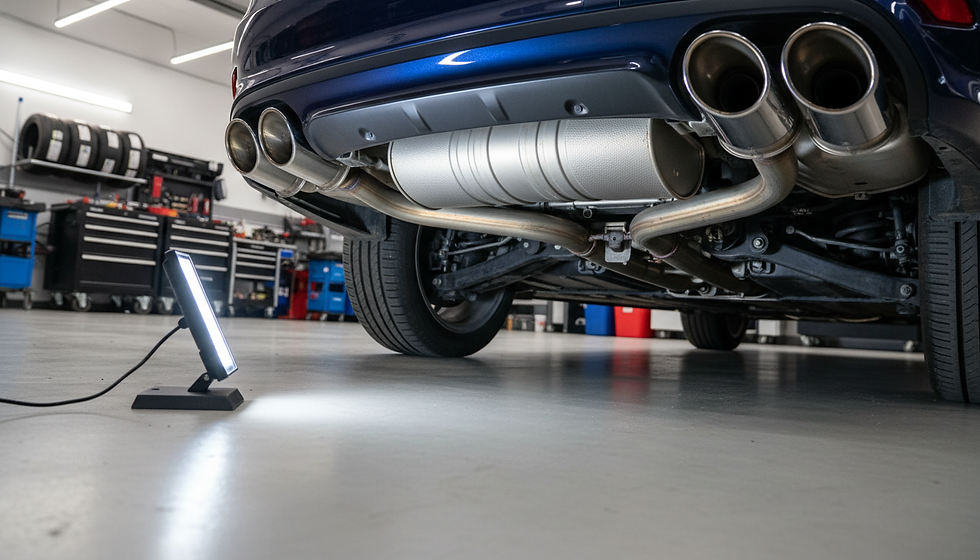
Exhaust and Underbody Problems After Snow Season
Your vehicle’s exhaust system and undercarriage are especially vulnerable during winter.
These components sit low to the ground and receive the full force of snow, ice, salt, and road debris.
Rust Formation on Exhaust Systems
The exhaust system is one of the first areas where winter damage appears.
Salt and moisture accelerate rust, particularly on:
Mufflers
Exhaust pipes
Catalytic converters
Exhaust hangers
Rust may begin as small surface spots but can eventually create holes in pipes.
Symptoms of exhaust rust damage include:
Loud exhaust noise
Reduced fuel efficiency
Unusual fumes
Rattling sounds under the car
If the exhaust system becomes severely corroded, it may require partial replacement.
Loose Underbody Shields and Protective Panels
Many vehicles include protective panels underneath the engine and transmission.
These shields protect critical components from debris. However, winter conditions can loosen them.
Common causes include:
Ice buildup
Hitting snowbanks
Road debris impacts
Drivers might hear scraping or dragging noises if a panel becomes loose.
Ignoring these noises can cause further damage if the panel eventually detaches while driving.
Blocked Exhaust or Drainage Areas
Heavy snow can also block parts of the vehicle temporarily.
In some cases, snow buildup around the exhaust can cause pressure problems if it freezes overnight.
Similarly, drainage channels around the vehicle may become clogged with dirt and salt.
Blocked drainage can lead to:
Water accumulation
Interior moisture
Rust inside body panels
Regular cleaning and inspection after winter can prevent these issues.

Body and Paint Damage Hidden by Winter Conditions
While mechanical damage gets the most attention, winter can also harm the exterior of your used car.
Many drivers notice paint problems only after spring arrives.
Stone Chips and Paint Damage from Winter Roads
Winter roads often contain sand, gravel, and debris used for traction.
These particles get kicked up by other vehicles and strike your car’s paint.
Over time, they cause:
Paint chips
Small dents
Scratches
Even tiny paint damage can expose metal underneath, allowing rust to form.
Addressing these issues early prevents corrosion from spreading.
Salt Residue Stains and Surface Corrosion
Salt can leave behind visible stains once winter ends.
If not removed properly, salt residue may damage paint surfaces.
Drivers should wash the vehicle thoroughly, paying attention to:
Door seams
Wheel wells
Underbody areas
Professional detailing or underbody cleaning can remove lingering salt buildup.
Windshield Damage from Ice and Temperature Changes
Cold temperatures can also weaken glass.
Tiny rock chips acquired during winter may expand when temperatures fluctuate.
This can eventually lead to cracks.
Drivers should inspect their windshield for:
Small chips
Spreading cracks
Distorted areas
Fixing minor windshield damage early can prevent costly replacement later.
Conclusion: A Quick Winter Damage Check Can Save You Thousands
Montreal winters put vehicles through some of the toughest conditions in North America.
Snow, ice, salt, potholes, and freezing temperatures all contribute to hidden wear that many drivers don’t notice right away.
Performing a post-winter damage check on your used car helps catch small issues before they grow into expensive repairs.
A simple inspection should include:
Checking for rust and corrosion
Inspecting suspension and tires
Examining the exhaust system
Looking for paint and body damage
Identifying electrical or moisture-related issues
Taking the time to review these areas helps extend the life of your vehicle and ensures safer driving as the warmer months arrive.
If you’re unsure where to start, working with a knowledgeable professional can make the process easier. For drivers in Montreal, Dragon Auto AMG is a trusted local expert that understands how Canadian winters affect vehicles and can help evaluate used cars for hidden seasonal damage.
A quick check today can prevent costly surprises tomorrow—and keep your vehicle running smoothly long after winter fades away.


Comments