Essential Exhaust Maintenance Tips Before Cold Weather Arrives

By: Dragon Auto AMG
Cold weather has a way of exposing weak spots in a vehicle. A small exhaust leak, a loose hanger, or light surface rust can turn into a noisy, expensive problem once freezing temperatures, road salt, and slush arrive.
The exhaust system sits under the vehicle, where it takes the worst of winter driving. In places with long cold seasons, including Montreal and other snowy regions, it deals with moisture, salt spray, ice buildup, and repeated temperature swings. A little attention before winter can help prevent fumes, poor performance, rattles, and premature corrosion.

Exhaust maintenance tips: Why cold weather is hard on exhaust systems
An exhaust system heats up quickly when the engine runs, then cools down after the vehicle is parked. In winter, that cycle becomes more extreme. Moisture forms inside the pipes, then mixes with acidic exhaust byproducts. Short trips make the problem worse because the system may not get hot enough to fully dry out.
Road salt adds another layer of damage. Salt and slush cling to the underside of the vehicle, especially around seams, clamps, joints, and hangers. Those areas are often the first to rust because they trap grime and moisture.
Winter can also make rubber mounts stiffer and more brittle. If an exhaust hanger was already worn, cold weather may cause more vibration or allow the pipe to sag. That can lead to clunks, scraping, or stress cracks near welded joints.
Common winter-related exhaust problems include:
Rust around joints and flanges
Cracked or loose hangers
Small leaks that grow louder over time
Rattling heat shields
Condensation dripping from the tailpipe
Exhaust smells inside or around the cabin
Some of these issues are minor at first. Others can affect safety. Exhaust leaks near the engine or under the passenger area need prompt attention because fumes should never enter the cabin.
Listen and look for early warning signs
Before cold weather arrives, take a few minutes to notice how the vehicle sounds and smells when it starts. A healthy exhaust system should not draw attention to itself. If the sound suddenly becomes sharper, louder, or rougher, something may have changed.
Start the car outside in a well-ventilated area. Stand near the rear of the vehicle and listen for odd noises. Then move along the side of the car without crawling underneath while the engine is running.
Watch for these signs:
A ticking noise near the engine during startup
A deep rumble from the center or rear of the vehicle
Metallic rattling when idling or accelerating
Exhaust smell inside the cabin
Soot marks near pipe joints or the muffler
A hanging pipe or crooked tailpipe
A brief puff of white vapor on a cold morning is usually normal. It is often just moisture turning to steam. Thick smoke, a strong fuel smell, or continuous unusual exhaust should be checked by a professional.

Inspect the vulnerable parts before temperatures drop
A full inspection is easier and safer on a lift, but a basic visual check can still reveal obvious problems. Make sure the vehicle is parked on level ground and the exhaust is completely cool before looking underneath from the side.
Focus on these areas.
Muffler and tailpipe
Look for holes, heavy rust, dents, or loose sections. Pay attention to the lowest parts, where moisture collects.
Clamps and flanges
These connection points can corrode faster than straight pipe. Rust flakes, missing hardware, or black soot marks may point to a leak.
Rubber hangers
Hangers hold the system in place and absorb movement. If they look cracked, stretched, or detached, the exhaust may shift when driving over snow, ice, or potholes.
Heat shields
Heat shields protect nearby parts from exhaust heat. Winter vibration can loosen them. A loose shield often makes a tinny rattle at idle or at certain engine speeds.
Catalytic converter area
Do not touch it, even after short drives, because it can stay hot. Look only for obvious damage, missing hardware, or loud noise from that area.
This is a good time for professional exhaust maintenance if anything looks uncertain. A technician can check for leaks, weak mounts, failing gaskets, and corrosion that may not be visible from the driveway.
Wash away salt and protect what you can
Once winter begins, road salt becomes a constant problem. The goal is not to keep the underside spotless. That is not realistic. The goal is to reduce how long salt sits on metal.
If temperatures allow, rinse the undercarriage after driving through salty slush. Many car washes offer an underbody rinse. Use it during winter, especially after storms or when roads have been heavily treated.
Before winter, make sure the underside of the vehicle is clean enough for an inspection. Built-up dirt can hide small holes and rusty seams. If the exhaust system already has advanced rust, a coating will not reverse the damage. It may even trap moisture if applied over loose scale. Ask a qualified shop before applying any underbody product near hot exhaust parts.
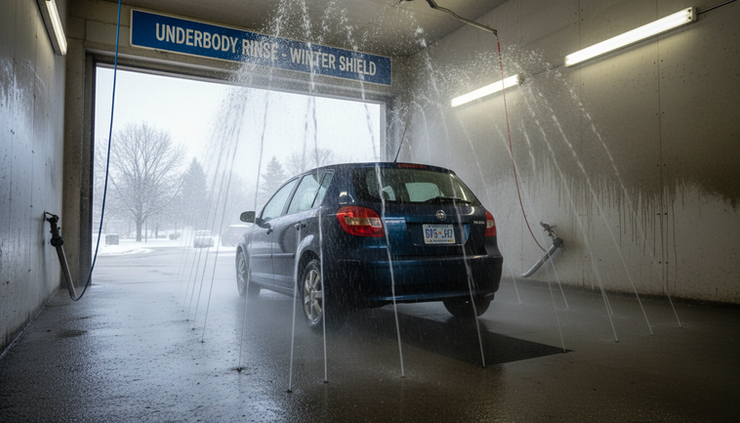
Driving habits also matter. Long enough trips help the exhaust reach full operating temperature, which can burn off moisture inside the pipes. If most trips are only a few blocks, condensation may stay in the system longer. When practical, combine errands so the vehicle gets a proper warmup.
Fix small problems before they become winter repairs
A small exhaust issue is usually easier to repair before snow and deep cold arrive. Once winter hits, rusted fasteners are harder to remove, garages get busier, and a minor rattle can become a broken hanger after a rough icy road.
Do not ignore a leak because the vehicle still runs. Exhaust leaks can affect noise, emissions, fuel efficiency, and cabin comfort. Depending on where the leak is, it may also interfere with oxygen sensor readings and engine performance.
It is especially smart to schedule a repair if you notice:
A louder exhaust note that appeared recently
A smell of exhaust when stopped in traffic
Rattling under the floor or near the rear bumper
Visible holes or cracked welds
Exhaust parts hanging lower than usual
Some repairs are simple, such as replacing a clamp, gasket, or rubber hanger. Others may require a muffler, flex pipe, or section of pipe. Acting early often gives you more repair options.

Make exhaust checks part of your winter prep
Winter prep should include more than tires, wipers, and battery testing. The exhaust system supports safety, noise control, emissions performance, and engine operation. It also lives in one of the harshest spots on the vehicle.
Before cold weather settles in, listen for changes, look for rust, check the hangers, and deal with small leaks early. During winter, rinse away salt when possible and avoid dismissing new rattles or exhaust smells.
A quiet exhaust is easy to take for granted. Give it attention before the first hard freeze, and it is more likely to stay that way through the cold months ahead.


Comments